Hello, readers! Today I decided to share a fun side quest dungeon/encounter I have in the back burner for my own DnD 5e campaign, featuring a map made by myself in Inkarnate.
This is inspired in part by Dimension 20's rat king encounter and Of Dairy and Darkness from Witcher 3. It is made to be a silly little sidequest or part of a larger dungeon, and can take place in a sewer, in ruins, or an abandoned basement.The party could have been hired to investigate a strange smell in a property or area, or perhaps they notice it themselves while out exploring.
The first chamber is a wide, cavernous space with low down ceillings. The room reeks of ancient, stinking cheese, and a green pungent mist hangs in the damp air. The room has three mechanial pedastals-- a glass dome covers wedges of mouldy blue cheese, and the stink extrudes from vents below them.
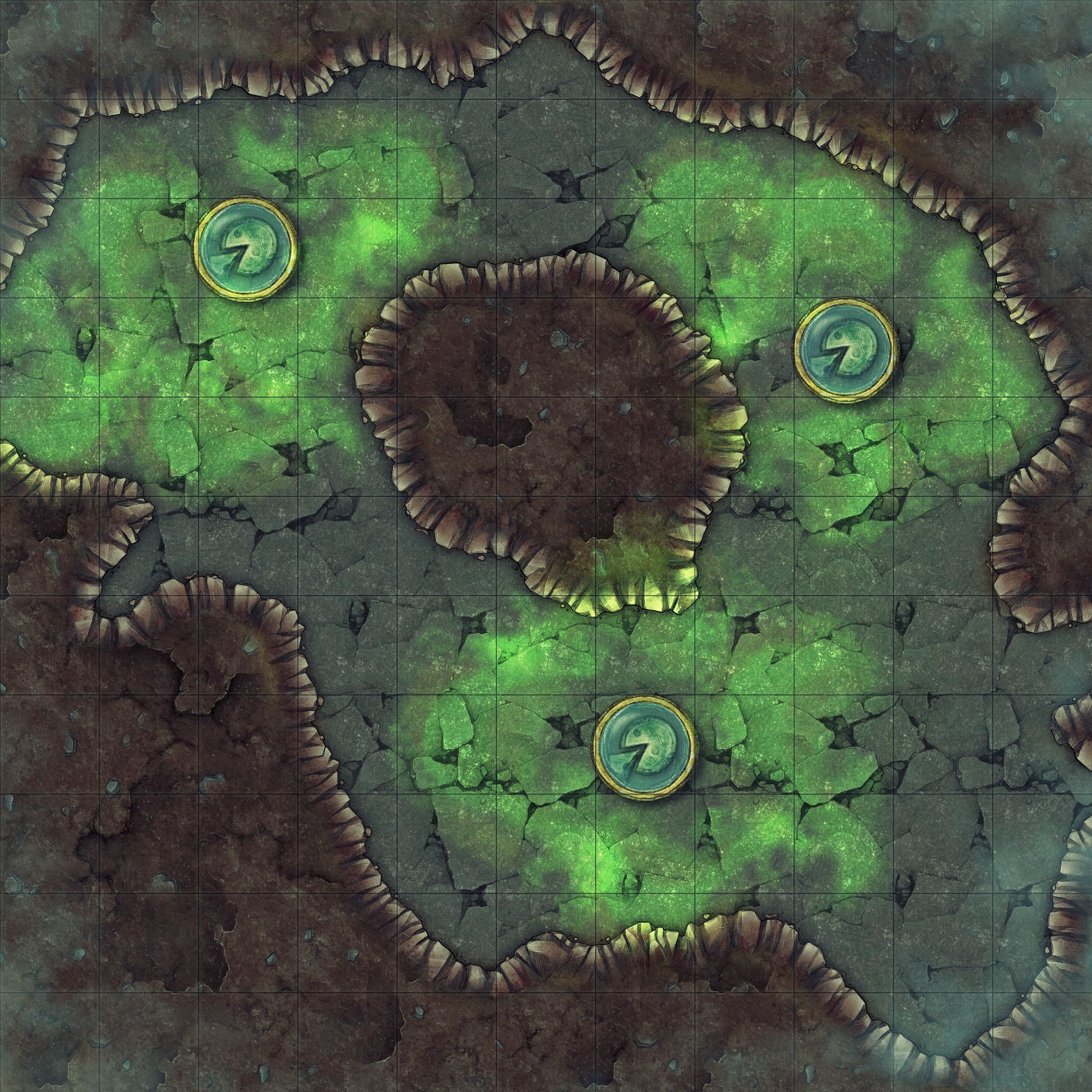
- The gas spreads 20ft out from each pedastal, and does 1d6 of poison damage every round someone spends within it.
- The glass has AC13 and 10 hitpoints. When it is broken, the gas spreads out a further 10ft, and everyone within it must make a DC13 Constitution saving throw or be blinded as their eyes water from the stench. They can attempt to save again at the end of their turn.
- The cheese is nasty. Real nasty. Touching it requires another Con save to prevent being poisioned. If anyone is crazy enough to try eating it causes 3d6 poison damage and automatic poisoning for 24 hours.
The cavern leads on to a staircase leading 60ft downards. It gets pitch black, and impossible to see without darkvision or light sources. There is a sudden 30ft drop following this.
Anyone who falls will plunge into warm water. This, unsurprisingly, is also stinkin'. If you've put this dungeon in a sewer, it's even worse. The water has a skin atop of it-- the result of cheesey condensation from above. The water is host to many rats who will swarm someone who falls in or submerges to dive deeper.
The swarms aren't immensely powerful on their own, but they can weigh down any unforunate swimmers when they occupy a creature's space which runs the risk of them drowning. Nerds and Scoundrels give an excellent overview of 5e's drowning rules if needed. They will drag them down by 5ft each turn.

Swarms can be added or removed depending on the level of your party. I would generally go for a swarm per party member, but for very low level parties one or two may be enough. The swarm could also be swapped out for another aquatic create of your choice.
The only way forward is an underwater that is 20ft below the water. Within the tunnel the water is hot. The base damage is 1d8 fire damage per round, but for stronger parties feel free to have the water get warmer the deeper they go and raise the damage. It will take 3 rounds for someone to make it to the otherside, and every time they take fire damage they must make a DC13 Constitution save to see if they manage to hold their breath.
The other side enters into the remnants of an underground chamber. The room is full of waste, rusted cages, and a throne constructed of debris. There are rats everywhere.
A top the throne is the rat king.This creature is a tangled mass of rats knotting their tails together, swarming, writhing, which a crown made of junk and bone perched atop it. The mass speaks as one, but with several tiny voices:
"FOOLS! You dare intrude upon the RAT KING'S domain!"
After defeating the rat king... is up to you! Perhaps there is a quest item hidden within the tangle of rats that caused them to animate. Maybe amongst the rat king's trash hoarde is something of value. In any case we've all had a gross, fun time together.
Fantastic content and so much fun! ❤️
ReplyDeleteThis looks like a reeeeally fun quest. Would love to try it out :)
ReplyDelete